Why a Silk Pillowcase Is Called a Beauty Treatment During Sleep
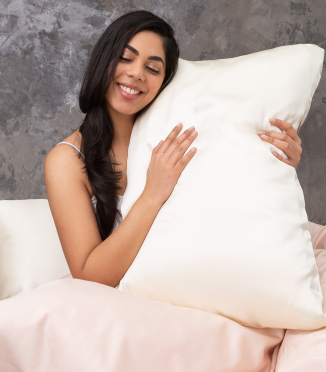
There are beauty treatments that require time, money and discipline – serums, masks, massages. And there is one that happens by itself while you sleep. All you need to do is change one thing: the pillowcase.
Sounds like a marketing promise? Maybe. But behind this statement lies completely explainable physics – friction between skin, hair and fabric.
%20(1680%20x%202000%20px)%20(1680%20x%202000%20px)%20(1800%20x%201800%20px).png)
What Actually Happens at Night?
For eight hours your face and hair are in contact with the pillow. That is a significant part of the day. And that contact is not neutral – the fabric's texture directly affects your skin and hair, even if you do not feel it.
Cotton, however comfortable for sleep, has one property few think about: its surface is slightly rough at a microscopic level. When the head moves during sleep – and it moves more often than you think – that surface rubs against skin and hair all night.
Silk works differently. Its surface is extremely smooth at a molecular level, which drastically reduces friction.
For the Skin: Less Friction, Fewer Consequences
Sleep Wrinkles – Not a Myth
"Sleep wrinkles" are the lines that form on facial skin due to constant pressure and friction against the pillow. For younger skin they disappear within minutes of waking. But with age the skin loses elasticity, and these lines begin to stay longer – until they eventually become permanent wrinkles.
Silk, thanks to its smooth surface, lets the skin "glide" on the pillow rather than press against it. This does not mean wrinkles will disappear overnight – but over time less mechanical stress on the skin can make a difference.
Moisture Balance
Cotton is a hygroscopic fabric – it absorbs moisture. That is great for bedding that needs to absorb sweat. But it also means cotton absorbs the skin's natural oils and moisture overnight.
Silk does not absorb this moisture as intensively. The result – skin feels less dry in the morning, especially for those who use night creams or serums. Something that costs a lot in the bottle can simply... stay on the skin rather than being absorbed into the pillowcase.
For Sensitive Skin – an Additional Reason
Silk is naturally hypoallergenic and does not create an environment where dust mites feel comfortable. For those who suffer from acne, rosacea or simply sensitive, easily irritated skin – less friction and fewer accumulated allergens mean less irritation in the morning.
For Hair: The Difference You Will See in the Mirror
Breakage and Split Ends
Hair strands have their own structure – microscopic cuticle scales that work best when "closed" and smooth. Friction against rough fabric lifts these scales, causing split ends and breakage.
On silk's surface hair glides rather than catches. Less mechanical stress means less damage – especially during sleep, when hair is pressed against the pillow at the same point for a long time.
Moisture in Hair
Just like with skin – cotton absorbs moisture from hair. Dry, frizzy hair in the morning? It might not just be the shampoo or dry air. The pillowcase plays a role too.
Less Tangling
Those who wake up with a full "nest" on their head know how unpleasant it is to fix their hair in the morning. A smooth silk surface means hair catches less on itself – in the morning you encounter fewer knots and comb through more easily.
"But Does It Really Work?" – An Honest Look
It is worth being realistic: a silk pillowcase does not replace a skincare routine or good hair care. It is not magic in a glass bottle.
But it is a passive change – it works every night, without extra effort. If you are already investing in night creams, serums or hair care products, the silk pillowcase helps those products remain more effective, rather than simply being absorbed into cotton.
It is a small change with a cumulative effect – similar to the difference between good and poor sunscreen that you will use daily for decades.
How to Choose a Quality Silk Pillowcase?
Not all silk is the same, and here it is important to know what to look for.
Mulberry silk – the highest quality type of silk, known for its especially smooth surface and durability. This is the standard worth looking for.
Momme (mm) – a measure of silk density. The higher the number, the denser and more durable the fabric. A good pillowcase is usually 19–25 momme.
Certifications – reliable bedding has the silk type and origin stated. If this information is absent – it is a signal to ask or look elsewhere.
Care – How Not to Lose These Properties
Silk requires gentler care than cotton, but it is not complicated:
Washing: on a gentle programme, in cold or lukewarm water, with a specialist silk detergent
Avoid: bleaches, aggressive detergents, fabric softeners
Drying: naturally in the shade – never in direct sunlight or in a tumble dryer
Proper care means these properties – smoothness, moisture balance, low friction – will remain for years, not just the first few nights.
Summary
"Beauty treatment during sleep" is not an exaggerated name. It describes precisely what happens: less friction, better moisture balance, less mechanical stress on skin and hair – every night, automatically, without extra effort.
It is an investment whose effect accumulates over time. And the only thing you need to do is change one item in your bed.
At Savashome.co.uk you will find silk pillowcases made from genuine mulberry silk – a simple change that works while you sleep.
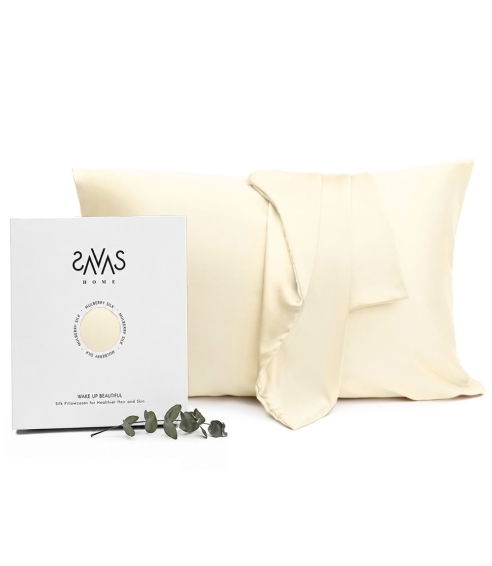
Silk pillowcase „Cream“
39,50€ 78,99€
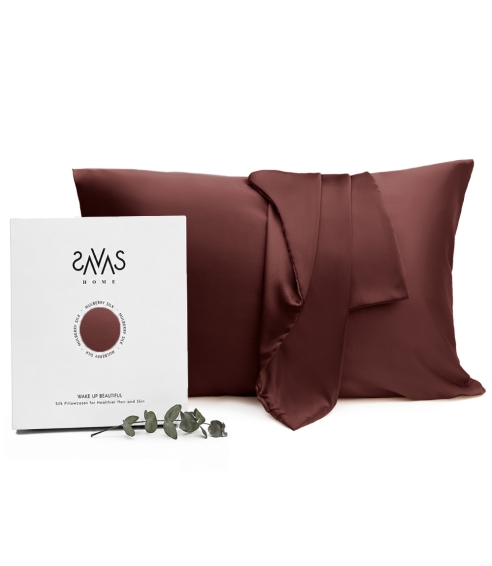
Silk Pillowcase „Hickory“
39,50€ 78,99€
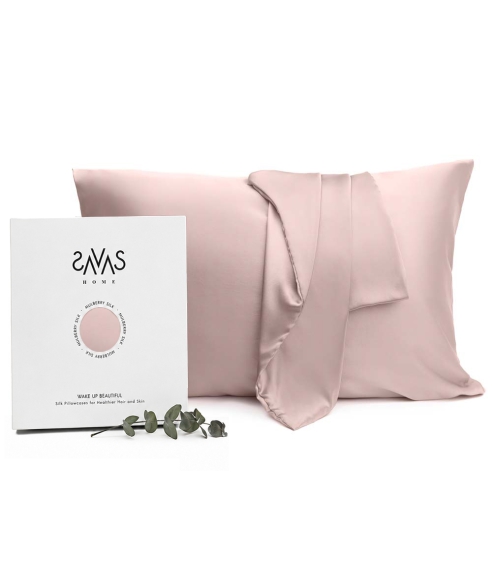
Silk pillowcase „Antico“
78,99€
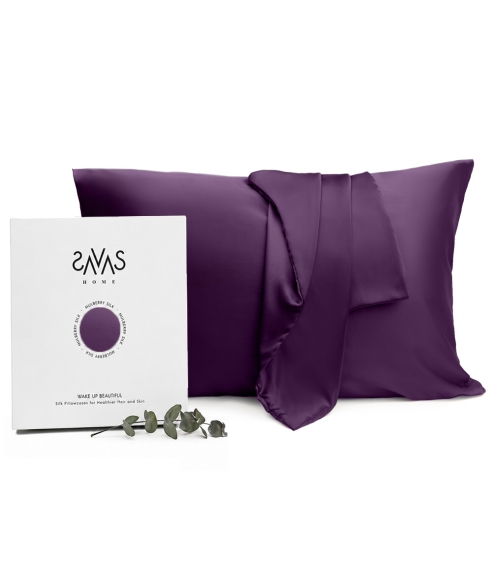
Silk pillowcase "Heather"
39,50€ 78,99€
%20(1680%20x%202000%20px)%20(1680%20x%202000%20px)%20(1800%20x%201800%20px)-cr-326x372.jpg "Best Fabrics for Bedding: A Comfort and Style Guide")
%20(1680%20x%202000%20px)%20(1680%20x%202000%20px)%20(1800%20x%201800%20px)-cr-326x372.jpg "Sleep apnea: causes, symptoms, and treatment")