Down duvet: what the down percentage really means — and why it is the most important indicator
In the shop you see two duvets. Both are called down duvets. Both look similar. One costs 60 euros, the other 180. The labels say something about down, feathers and fill power. And most people at this point simply choose the cheaper one — or the most expensive — and hope for the best.
But in the world of down duvets, price is not the most reliable indicator of quality. The real indicator is the down percentage — and most people never look at it.
Down and feathers — they are not the same thing
First of all — it is important to understand the difference, because this is where most misunderstandings arise.
Feathers are flat, rigid and heavy. They form the bird's outer protection. Feathers also provide warmth, but their structure does not allow as many air pockets to form as down does — and air pockets are what insulates heat.
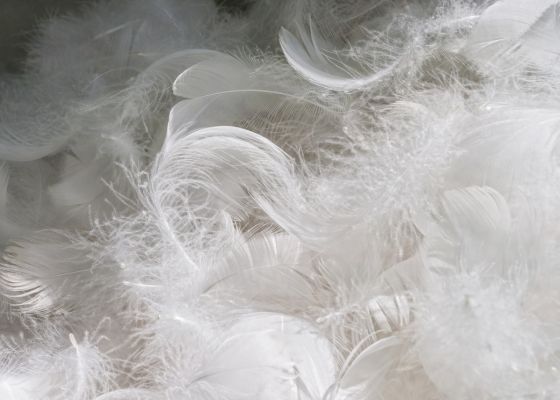
Down consists of three-dimensional, airy and lightweight structures found beneath the feathers. They are themselves like small air pockets. Each down cluster can trap a volume of air many times greater than its own size. It is precisely this that allows a down duvet to be so warm and at the same time so light.
Once you understand this difference, it becomes clear why the down percentage is so important.
What the down percentage means
The down percentage is an indicator showing what proportion of the duvet's filling consists of genuine down rather than feathers.
For example:
- 90/10 — 90% down, 10% feathers. High quality duvet.
- 70/30 — 70% down, 30% feathers. Medium quality.
- 50/50 — exactly half down and feathers. Lower quality.
- 30/70 — only 30% down. Essentially a feather duvet with a down addition.
Technically any duvet containing even a single piece of down can be called a "down duvet". This is the reason why "down duvets" can be found in shops for 30 euros — they simply contain very little genuine down.
How the down percentage affects the duvet's properties
Warmth and lightness
The more down, the more air pockets, the better the thermal insulation — and the lighter the duvet. This means that a 90/10 duvet can warm just as well as a 50/50, but will be significantly lighter. This is not a miracle — it is physics.
Volume and structure
A duvet with a high down percentage has more volume — it "puffs up" and regains its shape more quickly. If you were to squeeze such a duvet and release it, it would return to its original shape within a few seconds. A duvet with a low down percentage will be heavier, flatter and slower to regain its shape.
Longevity
Down is more resilient than feathers. It retains its structure better after many washes and years of use. A duvet with a high down percentage typically lasts significantly longer — 10–15 years compared to 3–5 years for lower quality duvets.
Breathability
The structure of down allows air to circulate naturally. This means that a duvet with a high down percentage is not only warmer but also more breathable — it regulates temperature more effectively and causes less overheating.
Down percentage versus fill power — what matters more
This is where many people become confused, because both indicators are important but they measure different things.
Down percentage — measures how much down is in the duvet compared to feathers. This is a quality indicator.
Fill power — measures how much volume 30 grams of down occupies. This is an indicator of the quality of the individual down clusters.
Example: you can have a duvet with 90% down (high percentage), but if that down has a low fill power (e.g. 300), it will be less airy and provide less thermal insulation. And conversely — you can have down with 600 fill power, but if it constitutes only 30% of the filling, the duvet will still be heavier and less effective.
The best duvet has both indicators high: high down percentage (80–90%+) and high fill power (600+).
Why cheap "down duvets" are so heavy
Now that you know about the down percentage, you can understand why this happens.
A cheap duvet is filled mainly with feathers — they are cheaper raw materials. Feathers are heavy and flat, which makes the duvet heavy. To achieve the same level of warmth, more feathers are needed — this increases the weight further. And in the end you get a duvet that presses down on you, feels warm but is still not very effective.
A duvet with a high down percentage is more significant precisely because of its structure — it warms more effectively with less material, which means it can be both thinner and lighter.
How to read the label
Before buying a down duvet, look for the following information on the label:
Composition — e.g. "90% down, 10% feathers". The higher the first number, the better.
Fill power — if stated, the higher (500, 600, 700+) the better. Particularly important together with the down percentage.
Origin of the down — goose down is usually of higher quality than duck down, although both are quality options.
Fill weight — indicates how many grams of down and feathers are in the duvet. Together with fill power this determines the warmth.
Certifications — OEKO-TEX®, Responsible Down Standard (RDS) or similar certifications guarantee both the quality of the raw materials and ethical production standards.
Is it worth paying more for a high down percentage
This is where a calculation begins that many people skip.
A duvet with a 90/10 down to feather ratio and 600+ fill power costs 150–250 euros. It lasts 10–15 years. That is 10–25 euros per year.
A duvet with a 50/50 ratio costs 50–70 euros. It lasts 3–5 years. That is 10–23 euros per year — almost the same, but with significantly worse sleep quality.
This means that a duvet with a high down percentage is not a luxury — it is simply a better investment in the long term.
If you are looking for a quality down duvet with a clearly stated down percentage and fill power figure, you will find options with detailed information about each product in the Savashome duvet category.
In summary
The down percentage is the indicator that most people do not pay attention to — and as a result they buy a duvet that does not meet expectations. Three most important things before buying:
First — check the down to feather ratio on the label. Look for at least 80/20, and ideally 90/10 or more.
Second — check the fill power. Together with the down percentage it determines the true thermal efficiency.
Third — do not rush. A down duvet chosen correctly lasts more than a decade and reminds you every night why it is worth choosing quality.
Down duvet “Ivy”
39,59€ 43,99€
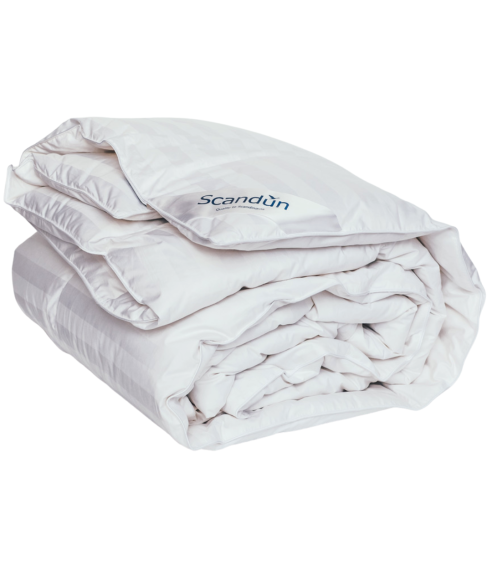
Goose down duvet “Selene”
269,99€ 299,99€
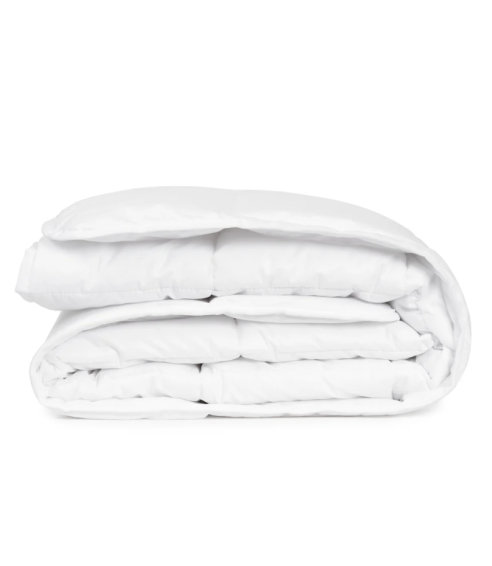
Down duvet “Morpheus”
125,99€ 139,99€
Summer goose down duvet “Selene”
224,99€ 249,99€
Summer down duvet “Morpheus”
170,99€ 189,99€
Winter Goose Down Duvet „Selene“
341,99€ 379,99€