
Goose down versus duck down — what sets them apart and whether it is worth paying more
On down duvet labels you will often find two phrases: "goose down" or "duck down". The price usually differs — duvets with goose down are more expensive. But why? Does the difference really matter? And is it worth paying more?
The answers exist, but they are not as straightforward as you might expect.

The biological reason — why goose down differs
Geese and ducks are birds of different sizes — and this has a direct impact on down quality.
Geese are larger birds. Their down is bigger, airier and has naturally higher structural quality. Each goose down cluster can create larger air pockets — which directly affects the fill power value and thermal efficiency.
Ducks are smaller birds. Their down is also of good quality, but smaller and more compact. Duck down fill power is usually lower than goose down — though this is not an absolute rule.
The fill power difference — that is the essence
Fill power is an indicator measuring how much volume 30 grams of down occupies. And here lies the fundamental difference between goose and duck down.
Goose down typically reaches 600–800+ fill power. The highest quality goose down — for example from Hungarian or Siberian white geese — can reach 800–900 fill power, which is an elite category.
Duck down typically reaches 450–650 fill power. High quality duck down can be compared with medium quality goose down — but it rarely reaches the same peak.
In practice this means: to achieve the same level of warmth with duck down, more down is needed — meaning a heavier duvet. Goose down allows the same warmth to be achieved with less down — meaning a lighter duvet.
The smell — a real problem with duck down
One thing that is rarely discussed, but which those who have bought down duvets know, is the smell of duck down.
Ducks are water birds whose sebaceous glands are more active than those of geese. This means their down has a natural, specific smell that can persist even after the industrial cleaning process. This smell usually appears when the duvet warms up — for example after the first night.
Quality production and a careful cleaning process can significantly reduce this smell — but completely eliminating it is difficult. Goose down usually does not have this problem or it is considerably less pronounced.
If you are sensitive to smells or planning to give the duvet as a gift — choosing goose down is the safer decision.
Climate and down quality — geography matters
This is an aspect that many people do not think about, but which significantly affects down quality.
Birds in cold climates — in Siberia, Iceland, Scandinavia, Hungary — have thicker, airier down. This is an evolutionary adaptation: the organism produces better thermal insulation to survive the winter. The same applies to both geese and ducks.
Therefore not only the species matters, but also the origin:
Hungarian goose down — considered the gold standard. Hungary has a long traditional goose farming culture and these geese grow up in a cold climate.
Siberian/Russian goose down — also of high quality. Extreme cold promotes perfection in down structure.
Icelandic eiderdown — this is a rare elite variant used in the most luxurious products. Collected by hand from nests and considered the finest in the world.
Duck down from Southeast Asia — down from birds living in a warmer climate typically has poorer structure and lower fill power. This is the most commonly used material in cheap duvets.
When duck down is a good choice
Although goose down is generally superior, this does not mean duck down is a poor choice. There are situations where it is an excellent solution.
For the mid-budget segment — high quality duck down, collected in a cold climate and carefully processed, can provide a very good balance between warmth and lightness at a lower price than an equivalent goose down duvet.
When the fill power value is high — if a duck down duvet has 600+ fill power, it is genuinely high quality regardless of species. Fill power matters more than species.
When smell is not a problem — if you are buying for yourself and know that the smell question is not relevant to you, duck down is an excellent price-to-quality ratio.
How to recognise incorrect labelling
Unfortunately the down duvet market also has incorrect labelling. Some manufacturers state "goose down" on labels but in reality use mixed filling or lower quality raw materials.
Ways to protect yourself:
Certifications — the Responsible Down Standard (RDS) certificate guarantees that the down's origin has been verified and meets the stated standards. The OEKO-TEX® certificate guarantees chemical safety.
Fill power value — if a duvet is marketed as goose down but fill power is not stated or is below 550, that is a warning signal.
Price — a genuine high quality goose down duvet cannot cost 40 euros. If the price is too good to be true — it probably is.
Fill weight and percentage — the label should state the exact ratio of down to feathers and the fill weight in grams.
Practical advice: what to look for when buying
If you want to choose correctly, here is a priority list:
First — look at fill power. 600+ is a good threshold above which quality is genuinely noticeable. This matters more than species.
Second — look at the down to feather ratio. 85/15 and higher is a good indicator regardless of whether it is goose or duck down.
Third — check the origin. Down of European or Scandinavian origin is usually of higher quality than from Southeast Asia.
Fourth — look for certifications. RDS and OEKO-TEX® guarantee that what is written on the label corresponds to reality.
If you are looking for a duvet with clearly stated down type, fill power value and origin, you will find options with detailed information about each product in the Savashome duvet category.
In summary
Goose down is generally of better quality than duck down — larger, airier, with higher fill power and without the smell problem. But this is not an absolute rule. High quality duck down, collected in a cold climate and with 600+ fill power, can be better than low quality goose down.
Three things that matter most:
Fill power — this matters more than species. Duck down with 700 fill power is superior to goose down with 400 fill power.
Origin — cold climate = better down regardless of species.
Certifications — guarantee that the label corresponds to the contents.
Goose or duck — the right choice does not depend on the species but on the specific product's indicators. Read the label, not just the headline.
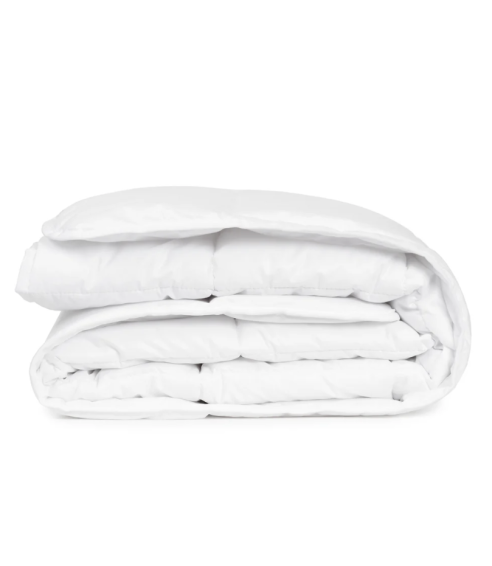
Down duvet “Ivy”
39,59€ 43,99€
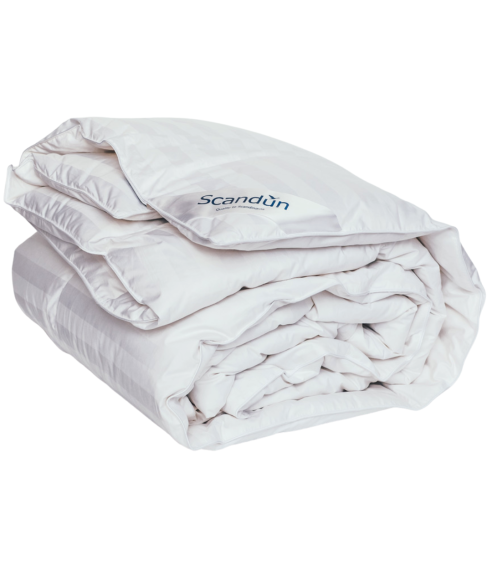
Goose down duvet “Selene”
269,99€ 299,99€
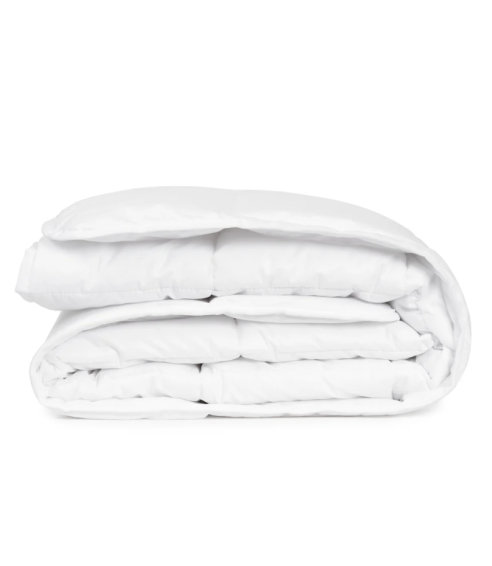
Down duvet “Morpheus”
125,99€ 139,99€
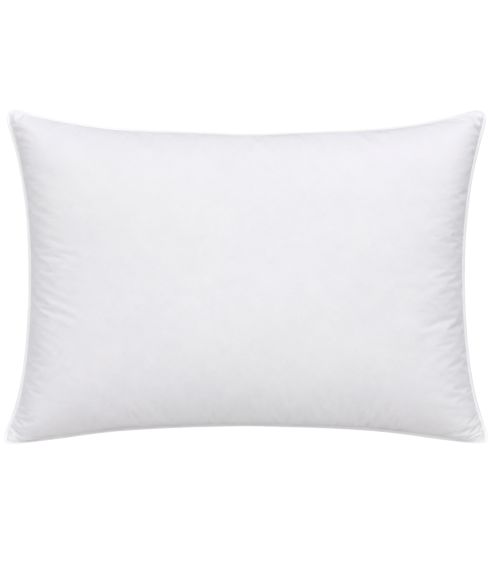
Goose down pillow “Selene”
116,99€ 129,99€
Summer goose down duvet “Selene”
224,99€ 249,99€
Summer down duvet “Morpheus”
170,99€ 189,99€
Winter duvet “Ivy”
48,59€ 53,99€
Winter duvet “Morpheus”
155,69€ 172,99€
Winter Goose Down Duvet „Selene“
341,99€ 379,99€
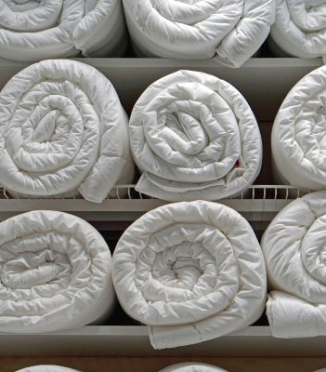

-cr-326x372.jpg "Down pillows: designed for your peaceful rest.")