
Hormones and night sweating: menopause, pregnancy, thyroid
Night sweats are one of the most common issues women experience during periods of hormonal change. Hormones in the female body directly affect the regulation of body temperature, meaning that even small fluctuations can lead to intense sweating at night. This phenomenon is especially common during menopause, pregnancy, or in cases of thyroid disorders. Understanding why this happens in the female body and how to reduce discomfort is essential for quality sleep, emotional balance, and overall daily well-being.
.jpg)
Menopause and night hot flashes
Menopause is one of the most intense hormonal stages, during which night sweating is very common. Fluctuations in estrogen levels directly affect the thermoregulation centers in the brain, causing the body to suddenly “overheat,” even if the environment is not warm. Hot flashes, a sudden rise in body temperature and heavy sweating often disturb sleep quality, leading to frequent awakenings and morning fatigue. Because of these symptoms, many women look for ways to improve nighttime comfort.
Pregnancy and hormonal changes
Pregnancy is another period when hormonal balance constantly shifts. Changes in progesterone and estrogen levels affect temperature control, so many pregnant women experience night sweating. Increased metabolism, enhanced blood circulation and the physical demands of pregnancy further contribute to this phenomenon. An appropriate sleep environment can significantly improve comfort during this period.
Thyroid disorders
The thyroid gland is one of the most important endocrine glands responsible for metabolism and temperature regulation. In hyperthyroidism — an overproduction of thyroid hormones — the body becomes overly active, generating more heat and causing excessive sweating, especially at night. Hypothyroidism can also disrupt thermoregulation, although it more commonly leads to feelings of cold. Persistent night sweating should be discussed with a doctor, as it may indicate endocrine issues.
How bedding can help reduce night sweating
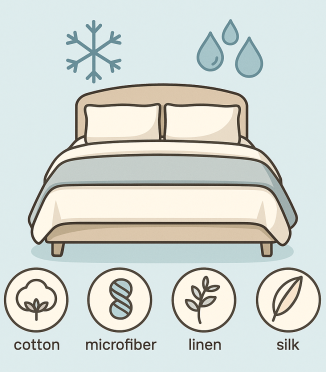
Hormonal night sweating can be difficult to control medically, so it is crucial to improve your sleep environment. One of the simplest and most effective ways is choosing the right bedding. Natural fabrics such as cotton, linen and bamboo offer excellent breathability and moisture absorption, helping maintain a more stable body temperature at night. Linen is especially effective — it evaporates moisture quickly, cools the body and naturally regulates temperature.
Synthetic fabrics trap heat and may worsen sweating episodes, while natural bedding can significantly improve sleep quality during hormonal changes.
If you are looking for high-quality, natural, breathable bedding that can help reduce night sweating, we invite you to visit the SAVAS Home online store.
There you will find a wide selection of linen, cotton and bamboo bedding, made in Lithuania and designed for comfortable, restful sleep.
Conclusion
Hormones have a strong influence on temperature regulation, so night sweating during menopause, pregnancy or thyroid disorders is a completely normal symptom. While the medical causes cannot always be eliminated, choosing natural, breathable bedding can greatly reduce discomfort and improve sleep quality. Self-care begins with rest — and quality sleep begins with a proper sleep environment.


%20(1680%20x%202000%20px)%20(1680%20x%202000%20px)%20(1800%20x%201800%20px)-cr-326x372.jpg "Sleep apnea: causes, symptoms, and treatment")