
How to Sleep on a Plane: Tips for a Comfortable Flight
How to Sleep Better on a Plane: Tips for a More Comfortable Flight
Some people can sleep on a plane with no problem, while others can’t drift off at all. Most of us fall somewhere in between—let’s face it, in‑flight sleep is rarely deep or comfortable. However, there are a few things you can do to boost your chances of truly resting during your flight.
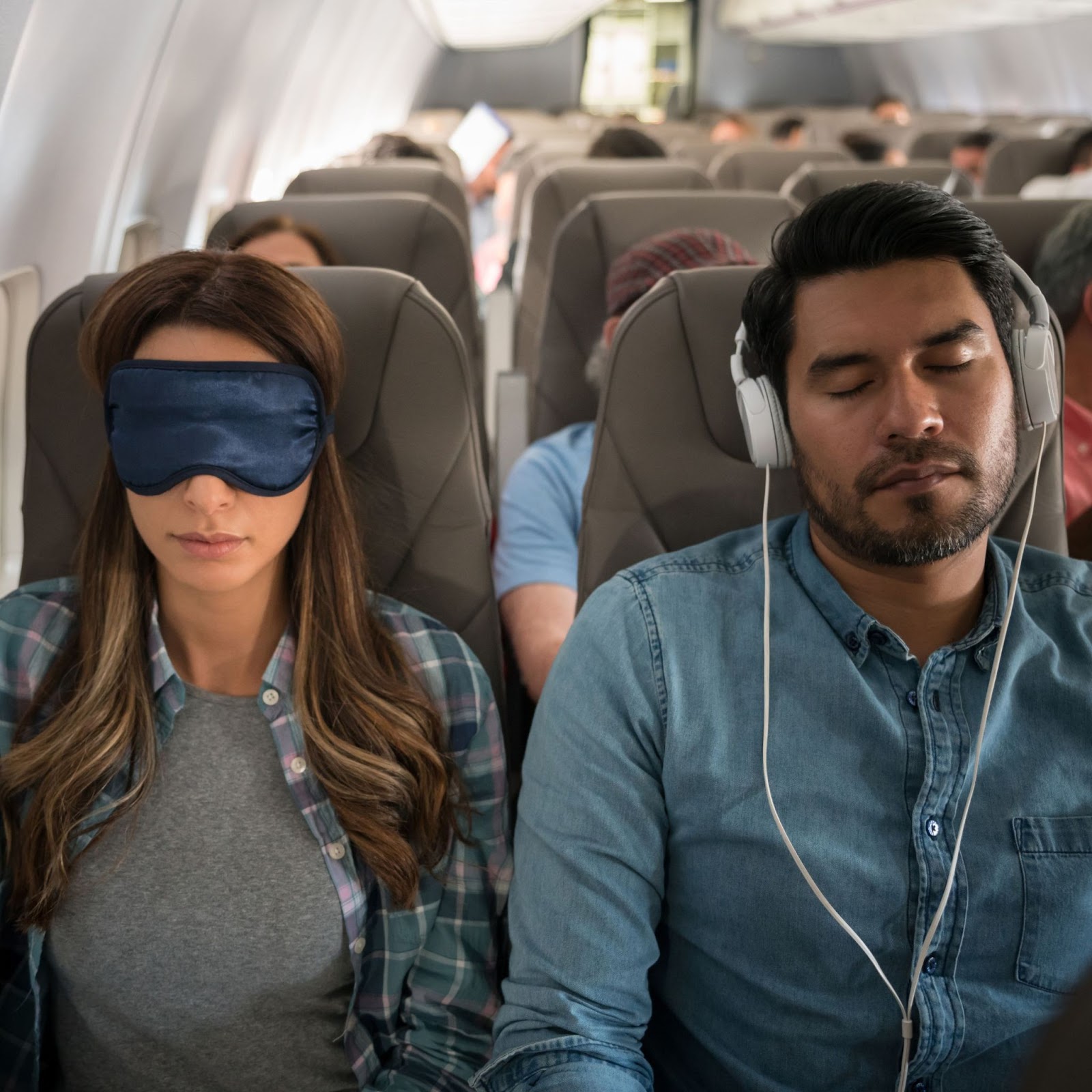
1. Choose the Right Seat
-
Window or exit‑row seats offer more room and fewer disturbances.
-
Avoid seats near the lavatories, where there’s more traffic and noise.
-
Skip the last row if you plan to recline—many don’t.
-
Try the wing area: engine noise creates a gentle “white noise” that can help mask other sounds and lull you to sleep.
2. Get Proper Support
-
Reverse your travel neck pillow so the open side cups your head from behind.
-
Don’t be afraid to recline—it eases spinal tension (and dimmed cabin lights signal it’s fine).
-
Fill the lumbar gap with a rolled sweater, extra blanket, or a small travel cushion to maintain your natural spinal curve.
3. Dress for Comfort
-
Wear soft, breathable layers—cabin temperatures can swing.
-
Add compression socks on long flights to aid circulation and reduce swelling.
-
Bring your own blanket and pillow: airline-provided kits aren’t always clean or cozy. Secure your blanket beneath your seatbelt so you don’t get woken up for buckle checks.
You will find all these comfort-enhancing products on the Savashome website.
4. Eat and Drink Smart
-
Skip caffeine and sugar for a few hours before departure to avoid stimulating your system.
-
Limit alcohol: it dehydrates you in already dry cabin air and disrupts sleep cycles.
-
Choose light, nutritious snacks—nuts, bananas, or oatmeal bars will sustain you without spiking blood sugar.
Pack these essentials and establish a mini “sleep ritual” to turn even a cramped economy seat into a restful cocoon. With the right seat, support, attire, and pre‑sleep routine, you can land feeling genuinely rested. Safe travels!
%20(1680%20x%202000%20px)%20(1680%20x%202000%20px)%20(1800%20x%201800%20px)-cr-326x372.jpg "Does a sleep mask help you sleep better?")
%20(1)-cr-326x372.jpg "Tips for Traveling with Young Children")