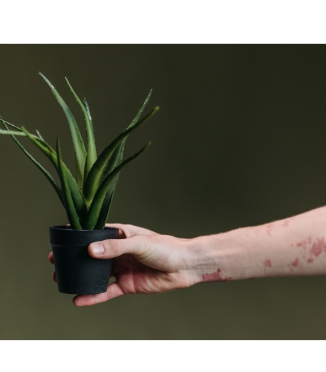
Psoriasis: how to choose the right bedding and reduce skin irritation at night
People with psoriasis often talk about creams, ointments and treatment methods — but rarely about what the skin is in contact with for 7–8 hours each night. Bedding is not neutral. It can soothe the skin or irritate it — and the difference between these two scenarios is sometimes simply the choice of fabric.
Why bedding matters for people with psoriasis
Psoriasis is a chronic autoimmune skin condition characterised by accelerated renewal of skin cells. This creates thick, red, flaking patches that can itch, burn or simply be sensitive to touch.
At night the skin needs to regenerate — this is biologically the most important time for skin renewal. But if the bedding fabric irritates, causes friction or accumulates heat — the regeneration process is disrupted. One sleeps worse, the skin does not have time to recover and symptoms are more pronounced the next day.
Additionally, psoriasis often worsens due to heat, sweat and moisture. This means that bedding which accumulates heat or moisture against the skin can directly provoke a flare-up.
Which fabrics suit — and why
Cotton percale — the best universal choice
Percale is a tightly woven cotton fabric that is smoother than ordinary cotton. This smooth structure is the key advantage — less friction between fabric and skin.
Percale breathes, absorbs moisture and is cool. This is particularly important at night when the skin needs to maintain an optimal temperature. Additionally percale is durable and withstands many washes — which matters because people with psoriasis need to wash bedding more frequently.
Percale is a good first step for those who want to improve their sleep environment without large investments.
Silk — the best choice for sensitive skin
Silk is the most documented fabric in the skincare context. Its surface is so smooth that friction is practically eliminated. Silk proteins — sericin and fibroin — are similar to the structure of human skin proteins and therefore do not cause an immune reaction.
Dermatologists frequently recommend silk pillowcases for patients with atopic dermatitis, psoriasis and rosacea — not as treatment, but as a means of reducing nocturnal irritation.
Silk naturally regulates temperature — warms when cold, cools when warm. This is particularly important for people with psoriasis as temperature fluctuations can provoke a flare-up.
Lyocell (Tencel) — the best for moisture management
Lyocell actively transports moisture away from the skin's surface. This means that even if you sweat at night — the skin remains relatively dry. A damp environment against the skin is one of the triggers for psoriasis flare-ups, so lyocell addresses this problem directly.
Additionally the production process of lyocell is ecological — the fabric contains no chemical additives that could irritate sensitive skin. It is softer than cotton and very smooth.
Linen — cool but not for everyone
Linen is naturally antibacterial and breathable. It regulates temperature excellently and is long-lasting. However linen can be rougher — particularly new linen, before a few washes.
If psoriasis patches are sensitive to touch — new linen may irritate. Washed and "softened" linen is a much better choice. If you plan to choose linen — wash it several times first before using.
Which fabrics to avoid
Synthetic fabrics — the main problem
Polyester, microfibre and other synthetic fabrics are the main psoriasis triggers in bedding. They accumulate moisture and heat against the skin, cause static electricity which directly irritates sensitive skin, do not absorb sweat and may contain chemical additives that irritate the skin.
If you currently use synthetic bedding and notice that the skin condition is worse in the morning — there may be a direct connection.
Thick cotton fabrics
Thicker cotton such as flannel and towelling accumulates heat and breathes less. In winter it may seem appealing but for someone with psoriasis this warmth can provoke itching and flare-ups.
Chemically treated fabrics
Some fabrics are chemically treated — for mirror effect, easier ironing or colour intensity. These substances can irritate sensitive skin. Look for the OEKO-TEX® certificate — it guarantees that the fabric contains no harmful chemicals.
Practical tips for people with psoriasis
Change bedding more frequently
People with psoriasis should change bedding at least twice a week. Skin scales, sweat and moisture accumulate faster creating an environment that irritates the skin.
Wash without fragrances
Scented washing products and fabric softeners can irritate sensitive skin. Choose hypoallergenic, fragrance-free washing products. Avoid fabric softeners entirely — they coat fabrics and can cause reactions.
Avoid high washing temperatures
60°C disinfects but can shrink fabrics and make them rougher. 40°C is sufficient for hygiene purposes and preserves the softness of the fabric.
Humidifier in the bedroom
Dry air irritates psoriasis plaques. By maintaining 45–55% humidity in the bedroom the skin remains more moisturised — this reduces itching and discomfort at night.
What dermatologists say
Dermatologists are unanimous on several points. Natural fabrics are always better — they breathe, absorb moisture and do not cause static electricity. Synthetic fabrics are one of the most frequently mentioned factors worsening nocturnal comfort in psoriasis patients.
The OEKO-TEX® certificate is necessary — not desirable but necessary. It guarantees that the fabric contains no chemicals that can irritate sensitive skin.
Regular changing is more important than the fabric — even the best fabric does not help if bedding is changed rarely. Regularity is the foundation.
How to begin — priority list
If you want to improve your sleep environment with psoriasis here is where to start by effectiveness and cost.
First step — change pillowcases to percale or silk. This is the smallest investment with the most obvious effect since the face and head come into contact with the pillow most intensively.
Second step — change the washing product to a hypoallergenic fragrance-free one. This costs nothing and can produce results after one wash.
Third step — change the bedding set to percale lyocell or silk. This is a larger investment but a long-term solution.
A natural selection of bedding — percale lyocell and silk — can be found in the Savashome collection, where every product has an OEKO-TEX® certificate and clearly stated composition.
In summary
Bedding does not cure psoriasis. But it can significantly reduce nocturnal irritation, improve sleep quality and create better conditions for skin regeneration — or conversely provoke a flare-up.
Three important choices: natural fabric (percale silk or lyocell), OEKO-TEX® certificate and regular changing. Such small changes in the bedroom sometimes give more than another treatment method — because they act every night 7–8 hours continuously.