How to bleach white bedding without damaging the fabric?
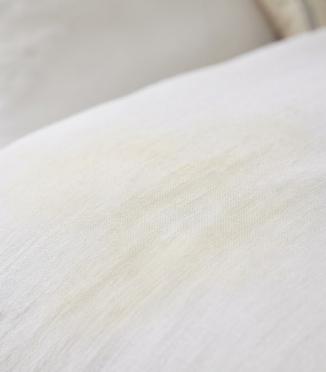
Not every greyish or yellowed set of bedding needs bleaching. Sometimes the problem is too much detergent. Residues can build up in the fibres and make the white look duller over time. Another common cause is sweat, skin oils, cosmetics and hair-care products. This is especially visible on pillowcases. White bedding can also lose its brightness if it is always washed with coloured textiles. So before reaching for a strong bleach, review the whole laundry routine. Sometimes changing a few habits is enough for the white to look fresher again.
Always start with the care label
The fact that a fabric is white does not mean it can be bleached. Cotton, linen, satin and synthetic fabrics can react very differently to bleaching agents and high temperatures. The first step should therefore always be to check the care label. If the label says bleach must not be used, follow that advice. Also check the maximum permitted wash temperature. Bleaching does not automatically require the hottest programme.
Do not start with strong chlorine bleach
Chlorine-based bleach can brighten white fabric quickly, but it is usually not the best choice for regular care. Frequent use of chlorine can weaken the fibres. Over time the fabric may become thinner, rougher and wear out faster. Some materials can even be permanently damaged. Treat strong chlorine bleach as a last resort rather than a regular product for white bedding. For everyday freshening of the white colour it is wiser to start with gentler methods.
Oxygen bleach is often the gentler choice
Oxygen-based bleaches are often used for white textiles. They usually work more gently than chlorine products and can help reduce yellowing, greyness and organic stains. These products must also be used according to the manufacturer’s instructions. A larger amount will not make the bedding twice as white. Too strong a concentration can needlessly stress the fabric. If you are using a product for the first time, start cautiously and watch how the fabric reacts.
Treat stains before washing
If the whole set is white but yellowish spots have appeared only in a few places, there is no need to bleach the entire set heavily. It is often better to focus on the problem areas. This is especially true of pillowcases, which collect sweat, skin oils and cosmetic residues. Use a stain remover according to the instructions and do not let it dry completely on the fabric unless the manufacturer recommends it. Also avoid vigorous rubbing. Aggressive rubbing of one spot can damage the fibres or change the surface of the fabric.
Can white bedding be soaked?
In some cases soaking can help refresh the white colour. Here too the material matters. If the fabric is suitable for soaking, use lukewarm water and a product intended for white textiles, following the instructions. Do not leave the bedding in a strong solution overnight just in the hope of a better result. A longer contact time does not always mean more whitening and can be too harsh on the fabric. After soaking, rinse the bedding thoroughly and wash it.
Does high temperature help bleach bedding?
Hotter water can help remove certain dirt, but it is not a universal bleaching method. If the manufacturer allows cotton bedding to be washed at a higher temperature, that can occasionally be useful. Constant washing in very hot water can wear the fabric faster or cause shrinkage. Follow the care label rather than the colour of the fabric alone. If the label says 40 °C, there is no reason to assume that 60 °C or more will automatically give a better result.
Less detergent can sometimes give a better result
If white bedding looks greyish, the problem may simply be too much detergent. When too much product is used, some of it can stay between the fibres. The fabric then looks less fresh and can become stiffer. Before using bleach, wash the bedding once or twice with the correct dose of detergent and a thorough rinse. Sometimes the result is surprisingly good even without extra bleaching.
Wash white bedding separately
If you want white bedding to keep its brightness as long as possible, wash it separately from coloured textiles. Even high-quality dyed fabrics can release a small amount of pigment in the wash. After one wash the change may not be noticeable, but after many washes the white can turn greyer. It is best to wash white bedding with other white or very light textiles of similar composition.
Do not overload the washing machine
For detergent and bleach to rinse out properly, the fabric needs space. If the machine is overfilled, water cannot move freely between the items. Detergent or bleach residues can then stay in the fabric. This is especially important with large duvet covers, which take up a lot of room and absorb a lot of water. It is better to wash a smaller load more thoroughly.
Do baking soda and vinegar help?
Home-care tips often recommend baking soda or vinegar. In some situations they can be useful, but they should not be treated as a universal way to bleach every fabric. How they are used also matters. Different cleaning products should not be mixed at random. Some combinations can reduce effectiveness, and household chemicals should generally be handled with care. If you want a safer and more predictable result, it is simpler to use a product made for white textiles and follow the instructions.
Sunlight can help, but do not overdo it
White cotton bedding can be dried outdoors if the care instructions allow it. Natural light can help white textiles look fresher. Do not assume that the longer the fabric stays in direct sun, the whiter it becomes. Prolonged strong sunlight can also affect the fibres of some fabrics. What matters most is not the longest possible drying time, but that the bedding is completely dry before storage.
Why does bedding still look yellowish after bleaching?
If the yellow tone has built up over months or years, one wash may not be enough. Some sweat, oils or cosmetic residues may have soaked deep into the fibres. In that case it is not sensible to use an ever-stronger product every time. A gentler treatment can be repeated later if the care instructions allow it. Gradual improvement is often better than trying for a perfectly white result in one wash and risking damage to the fabric.
When is bleaching no longer worthwhile?
A colour change does not automatically mean the bedding should be replaced. If the fabric has also become very thin, starts to tear, seams wear out or the surface is badly damaged, aggressive bleaching will not solve the problem. On the contrary, strong products can weaken old fabric even more. Assess not only the colour but the overall condition of the bedding.
How to keep the white so that bleaching is needed less often
The best way to keep white bedding white is to prevent strong yellowing. Change the bedding regularly, do not leave stains for a long time, use the right amount of detergent and wash white fabrics separately. Give extra attention to pillowcases, because they usually change colour first. It is also worth checking the washing machine itself from time to time. A dirty drum, detergent drawer or rubber seals can affect the wash result. With regular care, strong bleaches are needed much less often.
In conclusion
You do not need to reach for the strongest product immediately to whiten white bedding. The safest approach is to start with the care label, choose a suitable temperature, use a moderate amount of detergent and first try gentler products made for white textiles. If yellowing has appeared only in a few places, treat those areas first rather than bleaching the whole fabric aggressively. Remember that a brighter white is not worth ruined fabric. The best result is when the bedding looks fresh but stays soft, strong and pleasant to use. If you are looking for new white bedding for your bedroom, SAVAS Home offers white bedding in different materials, sizes and designs that you can choose according to your sleeping habits and preferred fabric feel.