What Are the Best Kitchen Towels? Cotton vs. Microfiber Compared
We use kitchen towels far more often than we might realize. One moment, we're drying our freshly washed hands, the next we're wiping dishes, and a few minutes later we're cleaning up water spilled on the countertop. Although kitchen towels may seem like a simple household essential, the material they're made from makes a real difference to how well they absorb moisture, how quickly they dry, and how comfortable they are to use.
Cotton and microfiber are two of the most common materials used for kitchen towels. Both have their advantages, but their properties and everyday uses are slightly different. So, which one deserves a place in your kitchen?
Cotton Kitchen Towels: A Timeless Everyday Essential
Cotton has been one of the most popular materials for home textiles for many years. This natural fiber is valued for its softness, absorbency, and easy maintenance.
One of the biggest advantages of cotton kitchen towels is their versatility. They're ideal for drying hands, wiping clean dishes, and handling everyday kitchen tasks. High-quality cotton fabric can absorb a considerable amount of water, making it convenient even during busy cooking sessions.
Cotton also feels pleasant against the skin. This matters especially if you spend a lot of time in the kitchen and wash your hands frequently. A soft towel makes everyday tasks more comfortable.
Durability is another important advantage. With proper care, cotton kitchen towels can last a long time while maintaining their functionality after repeated washing. However, quality depends not only on the material itself but also on the weaving technique, fiber quality, and fabric density.
Cotton does have one drawback. After absorbing a significant amount of water, it generally takes longer to dry than thinner microfiber fabrics. If a towel remains damp for too long, unpleasant odors may develop. That's why cotton towels should be hung somewhere with good air circulation.
Microfiber Kitchen Towels: What Makes Them Different?
Microfiber is a fabric made from extremely fine synthetic fibers, usually polyester and polyamide. Thanks to its unique fiber structure, it can effectively collect moisture, dust, and tiny dirt particles.
In the kitchen, microfiber towels are particularly appreciated for their practicality. They're useful for cleaning countertops, kitchen cabinets, glass surfaces, and stainless steel appliances. A microfiber cloth with the right texture can remove water droplets and fingerprints without leaving noticeable streaks.
Another advantage is their relatively quick drying time. Many microfiber towels are lightweight, allowing them to dry fairly quickly after washing or wringing. This makes them convenient for kitchens where towels are used throughout the day.
However, not all microfiber products are the same. Some are designed specifically for surface cleaning, while others are intended for absorbing moisture. Their performance depends on the fiber composition, fabric density, and overall construction.
It's also worth remembering that microfiber is more sensitive to high temperatures. Always follow the manufacturer's care instructions and generally avoid fabric softener, as it can reduce microfiber's ability to collect moisture effectively.
Which Kitchen Towels Absorb Water Better?
This is one of the most common questions people ask when choosing kitchen towels. Unfortunately, there's no single answer that applies to every product.
Cotton fibers naturally absorb water, which makes cotton towels excellent for drying hands and dishes. Thicker cotton fabric can often absorb a greater total amount of water, although this also depends on the towel's size and weight.
Microfiber, thanks to its extremely fine fibers, can collect water very effectively from smooth surfaces. Some microfiber fabrics can absorb several times their own weight in water. However, that doesn't mean every microfiber towel will automatically outperform cotton.
For example, if you're drying your hands after washing them, a soft cotton towel may feel more comfortable. But when you want to quickly remove water droplets from a countertop or polish a glass surface, a microfiber cloth is often more practical.
The important thing is to consider not just the fabric itself, but also how you plan to use the towel.
Which Kitchen Towels Last Longer?
Kitchen towels are washed more frequently than many other home textiles. They're regularly exposed to water, food residue, and grease, which makes proper care particularly important for their lifespan.
High-quality cotton is generally resistant to everyday wear. Many cotton towels can be washed at relatively high temperatures, provided the manufacturer's care instructions allow it. This is especially useful in the kitchen, where maintaining cleanliness is essential.
Microfiber towels can also be durable, but they require slightly different care. High temperatures, unsuitable detergents, and fabric softeners can negatively affect the properties of their delicate synthetic fibers.
The lifespan of both materials depends on product quality and how the towels are used. Therefore, it's difficult to determine which material lasts longer based on fiber composition alone.
What About Cotton and Microfiber Blends?
When choosing kitchen textiles, you don't necessarily have to settle for just one material. There are also kitchen towels that combine natural and synthetic fibers.
For example, a cotton and microfiber blend can be a practical choice for anyone who wants to benefit from the characteristics of different materials. Cotton provides natural softness and helps absorb moisture, while a suitable proportion of synthetic fibers can influence drying time, durability, and ease of care.
However, the final properties depend on the exact fiber ratio and fabric construction. Not every blended fabric will automatically perform better than 100% cotton.
In the SAVAS Home collection, you'll find kitchen towels made from different fabric compositions. It's always worth checking each product description for material details and care recommendations.
How Often Should You Wash Kitchen Towels?
Even the highest-quality kitchen towel won't stay clean for long if it isn't used properly. Kitchen textiles regularly come into contact with moisture, food, and different surfaces, so they should be replaced and washed frequently.
Towels used for drying hands and dishes should generally be changed daily or every few days, depending on how frequently they're used. If a towel becomes heavily soaked, visibly dirty, or comes into contact with raw meat juices, it should be replaced immediately.
It's also a good idea to keep separate towels for different tasks. Use one for clean hands, another for dishes, and a separate cloth for wiping kitchen surfaces. This helps reduce the risk of cross-contamination.
When washing kitchen towels, follow the manufacturer's recommended temperature, avoid overloading the washing machine, and make sure the towels are completely dry before storing them.
Can Kitchen Towels Be Part of Your Kitchen Decor?
When shopping for kitchen towels, practicality is usually the first thing we consider. However, appearance matters too.
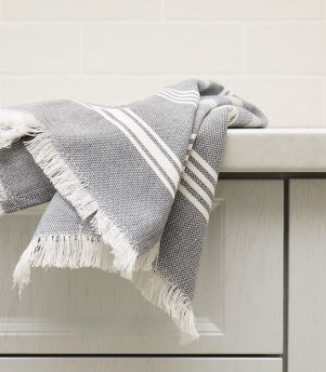
A neatly hung kitchen towel can complement the room's color scheme and make the space feel more welcoming. Neutral shades such as beige, gray, and white work beautifully in minimalist kitchens, while brighter colors or striped designs can add a subtle but noticeable accent.
If your kitchen features natural materials, wooden surfaces, and warm tones, cotton towels can blend beautifully with the surroundings. In a modern, functional kitchen, it's also useful to have easy-care microfiber cloths nearby.
Beautiful kitchen textiles don't have to be purely decorative. Ideally, the things we use every day should be both functional and aesthetically pleasing.
So, Which Kitchen Towels Should You Choose?
If you're looking for a versatile towel for everyday use, cotton is an excellent choice. It's soft, absorbent, and well suited for drying hands and dishes. Quality cotton towels also fit easily into a wide variety of kitchen interiors.
Microfiber is worth choosing when your priority is effective surface cleaning, collecting water droplets, and preventing streaks. These cloths are particularly useful for glass, metal, and other smooth surfaces.
If you want a practical option for different kitchen tasks, you could also try products made from a blend of cotton and microfiber.
The best kitchen towel doesn't necessarily have to be made from one particular material. In a well-organized kitchen, it's often more practical to have several towels designed for different purposes.