Sleep disorders in children: what should parents watch for?
The child cannot fall asleep. Or falls asleep but wakes up several times during the night. Or sleeps for a long time but looks tired in the morning. Each of these scenarios is familiar to many parents – and each can have a different cause.
Sleep disorders in children are more common than people think. Research shows that up to 30% of children experience certain sleep difficulties at least at one stage of life. This does not mean that medical intervention is always necessary – but it does mean it is worth knowing what to look for.
.jpg)
Why Does Children's Sleep Differ from Adults'?
The sleep structure of children differs fundamentally from that of adults. They spend more time in deep sleep phases, transition more frequently from one phase to another and are more sensitive to environmental changes – noise, temperature, light.
Moreover the child's nervous system is still maturing. This means that sleep regulation is not as stable as in adults. That is why night terrors, somnambulism or irregular sleep rhythm occur more frequently in children – and this is not always a pathological problem.
Main Types of Sleep Disorders in Children
Difficulty Falling Asleep
This is the most common complaint from parents. The child cannot fall asleep within a reasonable time – sometimes it takes an hour or longer.
Possible causes:
- Excessive stimulation before bedtime (screens, games, intense activity)
- Irregular sleep schedule
- Anxiety or stress (school, social relationships)
- Uncomfortable sleep environment – too warm, too noisy, too bright
Frequent Night-time Awakenings
The child wakes up several times during the night and cannot fall back asleep without parental help. This is normal for infants but may signal a problem in older children.
Possible causes:
- Sleep associations – the child has learned to fall asleep only with parental help
- Allergies or breathing problems (obstructive sleep apnoea)
- Anxiety
- Uncomfortable bedding or too warm an environment
Night Terrors and Nightmares
These are two different phenomena that parents often confuse.
Night terrors occur in the first half of the night – the child screams, sits up in bed with a frightened face but is actually asleep. Remembers nothing in the morning. More common in children aged 3–8 and usually passes on its own.
Nightmares are real bad dreams after which the child wakes up and remembers the dream. Occur in the later half of the night. Often related to daytime stress or fears.
Somnambulism (Sleepwalking)
The child gets up and walks while sleeping. Appears to be awake but is actually asleep. Do not try to wake them – simply lead them safely back to bed. More common in children aged 4–8 and in most cases passes during puberty.
Sleep Apnoea
This is a more serious problem requiring medical consultation. The child sleeps with loud snoring, makes breathing pauses or breathes through the mouth.
Signs to watch for:
- Loud snoring
- Noticeable breathing pauses during sleep
- Child sleeps with open mouth
- Frequent awakenings
- Daytime sleepiness despite adequate sleep
7 Signs It Is Worth Consulting a Doctor
Many sleep problems resolve themselves by changing routine or environment. However there are situations where professional help is needed:
- The child is constantly tired during the day – even if they slept enough hours
- School performance has deteriorated – lack of sleep directly affects attention and memory
- Behavioural changes – increased irritability, aggression or sadness
- Loud snoring or breathing pauses during sleep
- Night terrors recur frequently and intensely
- Somnambulism – especially if the child could injure themselves
- Sleep problems last longer than 3–4 weeks without a clear cause
What Can Parents Do at Home?
In most cases sleep problems resolve themselves by changing environment and routine – without any medication.
Stable Sleep Schedule
One of the most important things. The child should go to bed and get up at the same time every day – even at weekends. The biological clock greatly appreciates regularity.
Sleep Environment
Sleep quality depends greatly on the environment. Ideal conditions:
- Temperature – 18–20°C is considered optimal
- Darkness – curtains that block light well
- Quiet – or white noise if the environment is too noisy
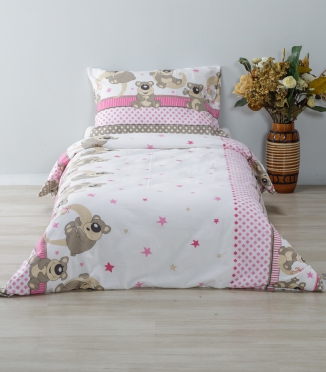
- Comfortable bedding – natural material, correct size, clean covers
Screen Limitation
Phones, tablets and televisions before bedtime are one of the main causes of sleep problems in children. Blue light suppresses melatonin production. It is recommended to turn off screens at least 1 hour before bedtime.
Sleep Ritual
A consistent evening routine helps the child understand that sleep is approaching. This can be a bath, reading a book, quiet music – the most important thing is that it repeats every evening at the same time.
Stress Management
If the child suffers from anxiety that disturbs sleep – talk to them. Allow them to express their fears. In the case of older children thinking about psychologist help is not a shame – it is an investment in health.
Bedding and Sleep Environment – Does It Really Matter?
Yes – and more than most people think.
The child spends sleeping up to 14 hours a day (depending on age). During that time bedding directly affects temperature, comfort and even the amount of allergens in the environment.
What to avoid:
- Synthetic fabrics that accumulate heat and cause sweating
- Old pillows in which dust mites accumulate – one of the most common allergens in children
- Overly warm duvets that cause overheating
What to look for:
- 100% cotton – natural, breathable, hypoallergenic
- Bedding with OEKO-TEX certification – guarantees the absence of harmful chemical substances
- A pillow of the right size for the child's age
Summary
Sleep disorders in children are common – and in most cases solvable. The most important thing is to pay attention to the signs, understand possible causes and take action: change the routine, improve the sleep environment or if necessary consult a doctor.
Good sleep is not just rest – it is the foundation of a child's health, growth and happiness. And sometimes a small change in bedding or environment can make a big difference.
At Savashome.co.uk you will find children's bedding made from natural cotton with OEKO-TEX certification – created for those who value not only a beautiful bedroom but also the child's health and comfort.
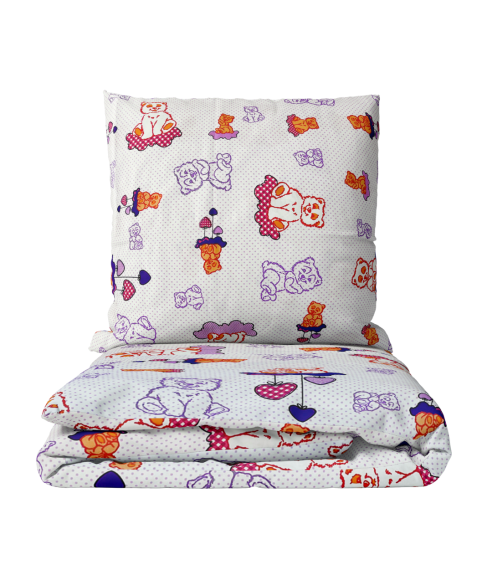
Children’s Bedding Set „Violet bears”
21,99€ 39,99€

Children’s Bedding Set „Eiffel violet”
24,74€ 44,99€
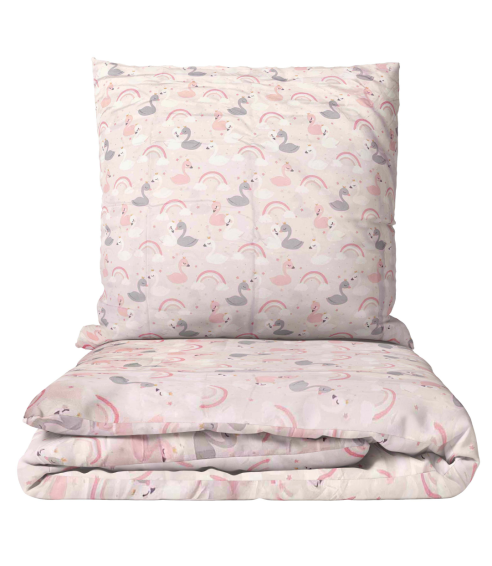
Kids’ bedding set “Swan Dreams”
20,25€ 44,99€
%20(1)-cr-326x372.jpg "Tips for Traveling with Young Children")