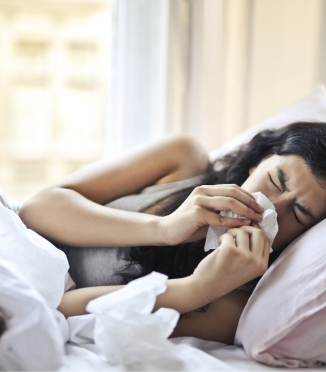
Sleep — an invisible bill you pay every morning
Every evening, as we go to sleep, we unknowingly sign a contract. None of us stop to think about its terms, because they seem obvious — after all, sleep is just rest, a time when the body "switches off." But in reality, it's one of the most complex biological processes there is, one through which the body settles its accounts with itself. And like any bill, if it isn't paid on time, it doesn't disappear — it accumulates interest.
%20(1).jpg)
What an unpaid bill looks like
Researchers estimate that around 40 percent of adults suffer from chronic sleep deprivation, and up to 20 percent struggle with insomnia. That means almost every other person around you is living with unpaid debt every day, without noticing its consequences — until they grow too large to ignore.
The debt starts building quietly. The first interest payments show up as a reduced ability to concentrate, a shorter fuse, more irritability. Memory problems, anxiety, and low energy follow. And eventually come the things most people dread: wrinkles, puffy under-eyes, skin that's lost its natural glow. It's no wonder growth hormone, produced most intensely during sleep, was once nicknamed the elixir of youth. The body produces the bulk of its daily supply while you're doing absolutely nothing — just sleeping.
Why we drive up our own interest rate
The problem isn't that we don't know sleep matters. It's that we live as though it were a luxury we can postpone. We work late, binge another episode, promise ourselves "seven hours will be enough this time." Then the weekend arrives, and we try to "catch up" by sleeping in until noon.
That's the most dangerous mistake of all. The body can't make up for lost sleep the way we make up for a missed payment — by paying the amount plus a surcharge. A disrupted sleep rhythm simply forces the system to reset, and on Monday morning you'll feel like someone starting the week already in the red: no energy, no focus, with the sense that something's missing before the day has even begun.
How to lower the payment
The good news is that this bill is manageable. The first and most important step is consistency: waking up and going to bed at the same time every day, even on weekends, teaches the body what to expect and lets it work more efficiently. Second comes the environment. A room that's too cold or too hot forces the body to work at regulating its temperature instead of resting; the ideal bedroom temperature is 16–18°C.
It's worth skipping heavy dinners at least three to four hours before bed — your digestive system needs that time to work, not to compete with sleep. Instead of screen light before bed, a book or a warm, caffeine-free drink helps you unwind far more effectively. And, of course, a well-ventilated room — fresh air is one of the cheapest yet most powerful investments you can make in quality sleep.
Bedding — the quiet investment that lowers the interest
There's one more detail we tend to overlook: what exactly we're sleeping on. Synthetic, non-breathable bedding makes the body overheat, stops the skin from breathing, and often leaves you tossing and turning at night — without you ever realizing the cause isn't stress or racing thoughts, but the fabric itself. Bedding made from natural materials, a pillow chosen to fit your needs, a duvet matched precisely to what you need — all of these act like small, steady installments that gradually shrink the overall debt.
In Savashome range, you'll find exactly this kind of bedding — breathable, soft, made from natural fibers that adapt to your body instead of forcing your body to adapt to them. Sometimes good sleep doesn't start with willpower, but with the simple decision to change what you sleep on.
In the end
Sleep isn't time you "spend" doing nothing. It's time when your body works on your behalf — repairing, healing, preparing you for the next day. Every evening, you get the chance to pay this bill on time, interest-free. Or to put it off — and pay it anyway, just with a surcharge you'll notice in the mirror, at work, and in your relationships with the people around you.
%20(1680%20x%202000%20px)%20(1680%20x%202000%20px)%20(1800%20x%201800%20px)-cr-326x372.jpg "Does a sleep mask help you sleep better?")
%20(1680%20x%202000%20px)%20(1680%20x%202000%20px)%20(1800%20x%201800%20px)-cr-326x372.jpg "Oversleeping: why it’s a problem and how to address it")
-cr-326x372.jpg "What is sleep, and why do we sleep?")

-cr-326x372.jpg "How to improve sleep quality and what hygiene practices to follow")