Night Sweats in Men: Hormones, Stress, and Lifestyle
Waking up sweaty does not necessarily mean there is a health problem. Sometimes the cause is very simple – an overly warm bedroom, a thick duvet, alcohol, or a stressful day.
However, if night sweats in men occur frequently, are very intense, or appear together with other symptoms, it may be worth looking for an underlying cause.
When are night sweats more than just overheating?
Light sweating during sleep is normal, especially if the bedroom is warm.
It is worth paying more attention if you wake up so sweaty that your nightwear or bedding is damp even though the room is not hot.
In such cases, sweating may be related not only to the environment but also to hormones, stress, lifestyle, medications, or certain health conditions.
Testosterone and hormonal changes
Low testosterone levels may be associated with hot flashes and increased sweating in some men.
However, night sweats alone do not automatically mean that you have low testosterone. Other symptoms may also occur, such as reduced energy, lower sex drive, loss of muscle mass, or erectile problems.
If you suspect hormonal changes, they can be assessed more accurately with blood tests and a consultation with your doctor.
Stress and anxiety
Sometimes hormones are not the cause – stress may be responsible.
During stressful periods, the body can remain more active even while you sleep. Your heart rate may increase, sleep may become more restless, and sweating may become more noticeable.
If the problem becomes worse during stressful weeks and improves after you have had time to rest, stress could be an important factor.
Alcohol
Alcohol can also contribute to night sweats because it affects body temperature regulation and circulation.
If sweating tends to occur after evenings when you have consumed alcohol, try reducing your intake or avoiding alcohol for a while and see whether your sleep improves.
This is one of the simplest ways to identify a possible connection.
Sleep apnea
Another possible cause is obstructive sleep apnea.
It is worth considering if you also snore loudly, wake frequently during the night, your partner notices pauses in your breathing, or you still feel tired in the morning despite getting plenty of sleep.
Night sweats are not the main symptom of sleep apnea, but they can occur alongside other symptoms in some people.
Thyroid and medications
An overactive thyroid can increase sensitivity to heat and cause excessive sweating. Other symptoms may also appear, including a rapid heartbeat, trembling hands, anxiety, or unexplained weight loss.
Some medications can also increase sweating, including certain antidepressants and hormonal treatments.
If the problem started after beginning a new medication or changing the dose, it is worth discussing this with your doctor. Do not stop taking prescribed medication without medical advice.
Don't forget your sleep environment
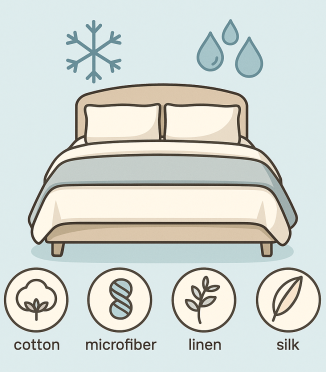
Sometimes the reason is much simpler – an overly warm room, a thick duvet, or less breathable bedding.
If you often feel hot while sleeping, consider choosing a lighter duvet and breathable materials such as cotton, percale, or linen.
You can find breathable bedding and other sleep textiles at SAVAS Home.
What can you try first?
For a few weeks, pay attention to when the sweating occurs. Try reducing your alcohol intake, keeping the bedroom cooler, choosing a lighter duvet, and noticing whether the problem becomes worse during stressful periods.
If you identify a clear pattern, it may become much easier to understand what is actually disturbing your sleep.
When should you see a doctor?
Consider speaking with a doctor if your night sweats:
- occur frequently or become increasingly severe;
- wake you from sleep and require you to change your clothes or bedding;
- occur together with fever, unexplained weight loss, severe fatigue, a persistent cough, or other unusual symptoms.
Night sweats are a symptom rather than a disease themselves, so it is important to consider your overall health and any other symptoms.
Frequently asked questions
Do night sweats in men mean low testosterone?
Not necessarily. Low testosterone is only one possible cause. Sweating can also be associated with stress, alcohol, medications, sleep apnea, changes in thyroid function, or simply overheating.
Why do I sweat at night even though the room isn't hot?
In this situation, it may be worth considering stress, alcohol consumption, medications, hormonal changes, and sleep quality. If the problem continues for a long time, it is best to discuss it with a doctor.
Can bedding make sweating worse?
Yes. A duvet that is too thick or bedding that traps heat can contribute to overheating. However, if you sweat heavily even in a cool environment, it is worth considering other possible causes.
Summary
Night sweats in men can be associated with everyday factors such as alcohol, stress, or an overly warm sleep environment, as well as hormonal changes, sleep apnea, thyroid function, or medications.
If the problem happens only occasionally, start by looking at your sleep environment and daily habits. However, frequent or very intense night sweats, particularly when accompanied by other symptoms, are a good reason to speak with a doctor.
Important: This article is for informational purposes only and does not replace professional medical advice.


%20(1680%20x%202000%20px)%20(1680%20x%202000%20px)%20(1800%20x%201800%20px)-cr-326x372.jpg "Sleep apnea: causes, symptoms, and treatment")